

Published on Oct 13, 2026

Super Admin
How Parents Can Vet a Family or Pediatric Practice Online Before the First Appoi
Choosing a doctor for your child is one of the first big decisions many parents make, and it usually starts on a phone screen. You search, you scroll, you open a few websites and read a handful of reviews. Within minutes you have an impression of a practice before anyone there has said a word to you.
That online research is worth doing well. A practice’s website and listings can tell you a lot about how it treats families, as long as you know what to look for and which signals matter more than others.
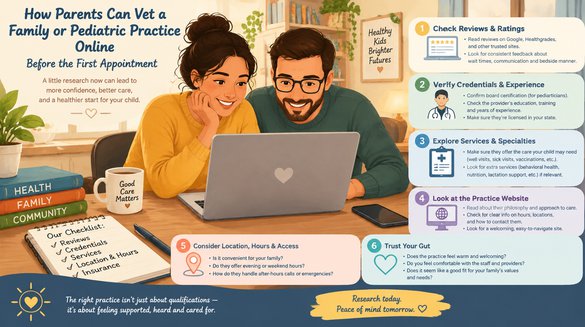
Start with the basics that affect your family
Before you think about bedside manner, confirm the practical details. Does the practice accept your insurance? Is it taking new patients? Where is it, and how long will it take to get there on a weekday afternoon with a sick child in the back seat? What are the hours, and is there any evening or weekend availability?
A well-run practice puts these answers where parents can find them quickly. If you have to dig through several pages or call just to learn whether they see newborns, that is useful information too.
Look at who the clinicians are
Good practice websites introduce their doctors, nurse practitioners and physician assistants by name, with their training, board certification and areas of interest. Some include a short note about why they chose pediatrics or family medicine. That kind of detail helps you picture who will actually be in the exam room with your child.
The American Academy of Pediatrics offers practical guidance on how to choose a pediatrician, including scheduling a prenatal or get-acquainted visit and checking credentials. Use what you learn online to decide which practices deserve that visit.
Read reviews the smart way
Reviews are helpful, but a single glowing or angry comment rarely tells the whole story. Look for patterns over time. Do several parents mention long waits, hard-to-reach front desk staff or billing confusion? Do others consistently praise how a particular doctor explains things to kids?
Pay attention to how the practice responds. A calm, respectful reply that invites the family to call the office suggests a team that takes feedback seriously. A practice that never responds, or responds defensively, is telling you something about how it handles problems.
Check how the practice communicates
Parents need answers at odd hours. Find out how the practice handles after-hours questions, whether there is a nurse line, and how quickly it usually returns messages. Many offices now offer a secure patient portal for appointment requests, test results and refill questions. Look for clear instructions on how to use it and what not to send through it in an emergency.
Notice, too, how the practice explains privacy. Online forms and portals involve sensitive information about your child. A trustworthy office describes how it protects that information in plain language rather than burying it in fine print.
Notice what the website says about the practice
A website is not proof of good care, but it is a window into how a practice thinks about families. Offices that invest in clear, honest primary care marketing tend to explain their approach to well-child visits, vaccines, same-day sick appointments and specialist referrals before you ever pick up the phone. That openness is a good sign.
Be cautious with sites that promise perfect outcomes, push expensive extras on the first page, or offer little real information beyond a phone number. You are looking for clarity, not a sales pitch.
Prepare your questions for the first visit
Your online research should end with a short list of questions to ask in person. How does the practice handle urgent concerns during the day? Who covers when your child’s doctor is away? How are referrals to specialists coordinated? How does the office prefer to communicate with parents of teenagers as they gain more independence?
The Agency for Healthcare Research and Quality publishes a simple guide, Questions Are the Answer, that helps families prepare for appointments and get more from each visit. It is a useful starting point for building your own list.
Trust your instincts after the first appointment
Even the best online research cannot replace the feeling you get after a real visit. Did the doctor listen to you? Did your child feel comfortable? Were your questions answered without rushing? If something feels off, it is fine to keep looking. Your child will see this practice for years, so it is worth finding a team you trust.
Online, the right practice should make it easy to understand who they are, how they care for children and how to reach them when it matters. In person, it should live up to that promise.

Safeguard Your Child Against Online Threat
Register Now Cancel Any Time
Available
on
Cancel Any Time
Available
on